





A Comparative Analysis between Physical Inactivity and Blood Glucose Levels in University students.
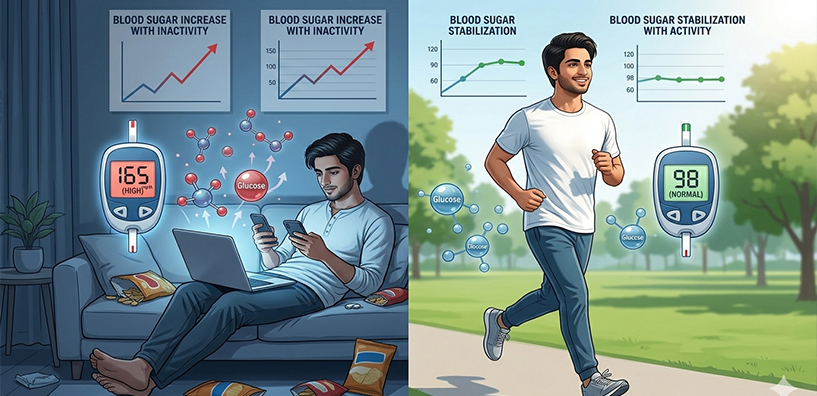
1. Introduction Physical inactivity is one of the major lifestyle factors contributing to abnormal blood glucose regulation and an increased risk of developing type 2 diabetes. When the body remains inactive for long periods, glucose uptake by muscles decreases because muscle contractions play a key role in utilizing blood glucose for energy. This leads to higher circulating glucose levels and, over time, moderate negative correlation (r = 0.42, p < 0.01) was found between physical activity and blood glucose. 4. Conclusion insulin resistance. Young adults today often have sedentary routines involving prolonged screen time and reduced physical movement, making it important to study how their activity patterns relate to blood glucose levels.